
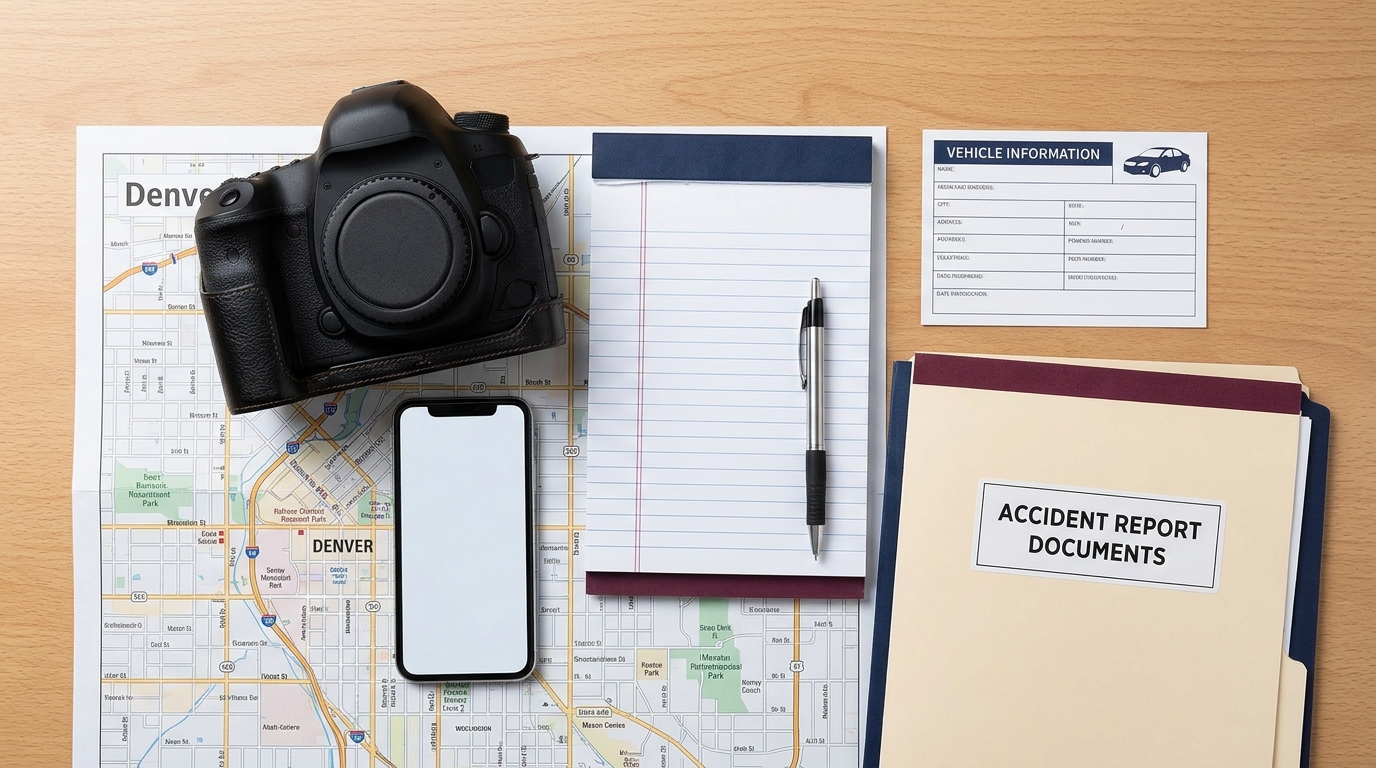
What evidence should you collect after a Denver car accident?
After a crash, the evidence you preserve can make a meaningful difference in how clearly the events, injuries, and financial losses can be understood. If you are able, focus first on safety and medical care, then collect or preserve the information that may support a Colorado car accident claim. If you are too hurt, shaken, or receiving emergency treatment, do not put evidence collection ahead of your health—others may be able to help, and some records can be obtained later.
Start With Safety, Then Document What You Can
Knowing what to do after a crash can feel overwhelming, especially in busy Denver traffic. Move to a safer location if it is possible and safe to do so, call 911 when appropriate, and accept medical attention if you may be injured. Colorado law may require drivers to report certain collisions, and a responding officer can create an official report.
Once immediate safety concerns are addressed, take a moment to document the scene if you are physically able. Evidence can change quickly: vehicles are moved, debris is cleared, weather shifts, and memories fade. A few careful photographs and notes may help preserve details that are difficult to recreate later.
Take Photos and Video of the Scene
Photographs are often among the most useful forms of Denver car accident evidence. Use your phone to take wide shots that show the overall scene, followed by closer images of the details. Do not put yourself in danger to get a photo, and do not step into traffic or approach an unsafe vehicle.
- All vehicles involved, including their positions before they are moved when safe to photograph
- Damage to each vehicle from several angles
- License plates, make, model, and distinguishing vehicle features
- Road layout, lanes, traffic lights, stop signs, construction zones, and posted speed limits
- Skid marks, debris, broken glass, fluid leaks, damaged guardrails, or damaged property
- Weather, lighting, road conditions, and visibility issues
- Visible injuries, torn clothing, or damaged personal property, when appropriate
A short video can provide useful context by showing the intersection, roadway, or surrounding conditions. It is also wise to save the original files rather than relying only on screenshots or edited images. Back them up to a secure cloud account, email them to yourself, or store copies in more than one place.
Get Police and Driver Information
Ask the responding officer how to obtain the report number and the agency that prepared it. The report may include the date, time, location, involved parties, witness details, officer observations, and other information relevant to the collision. It is important to remember that a police report is one piece of accident documentation; it may not contain every detail or decide legal responsibility on its own.
Exchange required information with the other driver, such as their name, contact details, driver’s license information, insurance carrier and policy details, and vehicle registration information. Consider taking a photo of the documents rather than relying on handwritten notes alone. Keep your own description of what occurred factual and brief. Avoid arguing about fault at the roadside or posting about the collision on social media.
Collect Witness Names and Contact Details
Independent witnesses may have seen important facts that the drivers did not see from inside their vehicles. If someone stops and offers information, ask for their full name, phone number, email address, and a brief description of what they observed. If they are comfortable doing so, you can ask whether they would be willing to provide a short written or recorded account in their own words.
Do not pressure anyone to take a side or tell them what to say. Simply preserve a way to contact them. A Denver personal injury lawyer may later be able to follow up before memories become less clear. Nearby businesses, residences, or public areas may also have cameras, but recorded footage is often overwritten quickly. Note potential camera locations as soon as you can.
Preserve Medical Records and Track Symptoms
Seek prompt medical evaluation when you are injured or suspect you may be injured. Some crash-related symptoms, including pain, headaches, dizziness, stiffness, numbness, and emotional distress, may not be obvious at the scene. A medical professional can evaluate your condition and explain appropriate care.
Keep copies of medical records, visit summaries, imaging results, prescriptions, referrals, therapy records, bills, and receipts for out-of-pocket costs. Follow your medical provider’s guidance, and let providers know about symptoms as they arise. These records may help show the care you received and the timeline of your recovery.
A symptom journal can also be useful. Each day or after meaningful changes, record the date, symptoms, pain level, medications, appointments, sleep issues, activities you could not complete, missed work, and how injuries affected ordinary tasks. Keep entries honest and specific. A simple contemporaneous record can be more reliable than trying to remember every detail months later.
Save Vehicle Repair and Financial-Loss Documents
Keep all paperwork related to your vehicle and property damage. This can include towing invoices, storage charges, repair estimates, mechanic reports, photographs taken during repairs, rental-car invoices, and total-loss valuation documents. If an item inside the vehicle was damaged, retain receipts, photographs, and replacement information when available.
For a Colorado car accident claim involving lost income, retain pay stubs, time-off records, employer correspondence, tax documents, and any written verification of work missed because of appointments or restrictions. These materials can help create a clearer picture of the financial impact of the crash.
Organize Insurance Communications Carefully
Report the collision to the appropriate insurer as required by your policy, but keep a record of every communication. Save letters, emails, text messages, claim numbers, adjuster names, voicemail messages, settlement offers, and notes from phone calls. After each call, write down the date, time, participants, and a concise summary of what was discussed.
Read requests and forms carefully before signing. Insurance questions can be important, and the facts of every situation differ. If you have concerns about your rights, proposed paperwork, or the information being requested, consider speaking with a qualified attorney before making decisions that may affect your claim.
If You Were Too Injured to Gather Evidence
You should never delay emergency care or risk further injury to collect evidence. If you were transported from the scene, unconscious, in severe pain, or otherwise unable to document the crash, that does not mean important evidence is gone forever.
A family member or trusted friend may be able to photograph your injuries and vehicle, gather your belongings, preserve damaged items, and help organize paperwork. Police reports, 911 records, medical records, vehicle data, repair documentation, and witness information may still be available. Acting promptly after you are stable can be helpful because video footage and other evidence may not be retained indefinitely.
At Ferris Law Firm, we understand that an injured person may be focused on recovery rather than paperwork. Our team can discuss the available information, help identify documents that may matter, and explain the next steps in a personal injury matter without making promises about any outcome.
Build One Organized Accident File
Create a digital folder and a paper folder for all accident documentation. Label files by date and source, and avoid altering original photos, messages, or documents. A straightforward timeline can be helpful: include the crash date, medical visits, treatment changes, insurance communications, repair milestones, work absences, and major expenses.
Organization does not need to be complicated. The goal is to preserve accurate information so that you, your medical providers, insurers, and any legal representative can more easily understand what happened and how it has affected you.
FAQ
Should I take photos if the police are already coming?
Yes, if it is safe and you are physically able. Police documentation can be valuable, but your own photos may capture vehicle damage, road conditions, and other details that are not fully reflected in a report.
What if I did not notice injuries until after I left the scene?
Consider seeking medical evaluation promptly and keep records of when symptoms began and how they changed. Some injuries are not immediately apparent after the stress and adrenaline of a collision.
Can I ask a witness for a written statement?
You can ask politely, but do not pressure the person or suggest what they should say. At a minimum, obtain reliable contact information and note what they said they observed.
Do I need to keep every insurance email and letter?
It is generally wise to retain all claim-related communications, including offers, requests for information, claim numbers, and notes about phone calls. These documents can help establish a clear record of the claim process.
When should I speak with a Denver personal injury lawyer?
You may wish to seek legal guidance when you have been injured, face significant expenses or time away from work, receive a settlement offer, or have questions about preserving evidence. An attorney can review the circumstances and explain options based on the available facts.
Talk With Ferris Law Firm About Your Next Steps
After a collision, it can be difficult to balance medical care, insurance calls, vehicle repairs, and everyday responsibilities. Ferris Law Firm serves people in Denver who need to understand their options after an injury-causing accident. To discuss your situation in a consultation, call us at (303) 377-5500 or visit the Ferris Law Firm website. This information is general in nature and is not individualized legal advice.